
Tarot Pronunciation
Have you ever wondered how the correct tarot pronunciation can enhance your understanding of this ancient practice? For many, tarot reading is not just about predicting the future but also about connecting with a rich history and tradition.
Understanding the meaning behind the cards is crucial, and it begins with respecting the origins and the language associated with them. The way we pronounce the names of the cards can significantly impact our connection to the tarot’s symbolism and energy.
As we explore the world of tarot, we will delve into the importance of correct pronunciation and its significance in tarot reading. This journey is not just about learning; it’s about deepening your connection with the tarot’s mystique.
Key Takeaways
- Correct tarot pronunciation enhances understanding and connection to the practice.
- The history and tradition behind tarot cards are deeply rooted in their pronunciation.
- Pronunciation affects the energy and symbolism associated with the tarot.
- Understanding tarot meaning is crucial for a deeper connection.
- Respecting the origins of tarot is essential for a meaningful practice.
Overview of FindAstrologer Tarot
The journey into tarot begins with understanding its name, a word that holds significant cultural and historical weight. Tarot has been a subject of fascination for many, used for divination, self-reflection, and as a tool for gaining insight into one’s life.
Understanding Tarot Pronunciation
The word “tarot” is derived from the French language, which in turn borrowed it from the Italian “tarocchi.” The correct pronunciation is often debated, with variations such as “tah-roh” or “teh-roh.”
Understanding the origins and evolution of the word can provide insights into its correct pronunciation.
The Significance of Correct Pronunciation
Correctly pronouncing “tarot” is not just about linguistic accuracy; it’s also about showing respect for its cultural heritage. The tarot has its roots in 15th-century Europe, and its evolution is intertwined with various cultural practices.
| Pronunciation Guide | Language/Culture | Significance |
|---|---|---|
| Tah-roh | French/Modern Usage | Commonly used in contemporary tarot practices |
| Teh-roh | Italian/Original | Rooted in the original Italian “tarocchi” |
By understanding and using the correct pronunciation, tarot enthusiasts can deepen their connection to the practice and its history.
Card Meanings Explained
Tarot readings are only as insightful as the reader’s understanding of the card meanings. To truly appreciate tarot, one must delve into the symbolism and significance of each card.
The tarot deck is divided into two main categories: the Major Arcana and the Minor Arcana. Understanding the distinction between these two is crucial for interpreting tarot readings accurately. The Major Arcana cards represent major life themes, transitions, and archetypes, while the Minor Arcana cards reflect everyday situations and details.
The Significance of Arcana
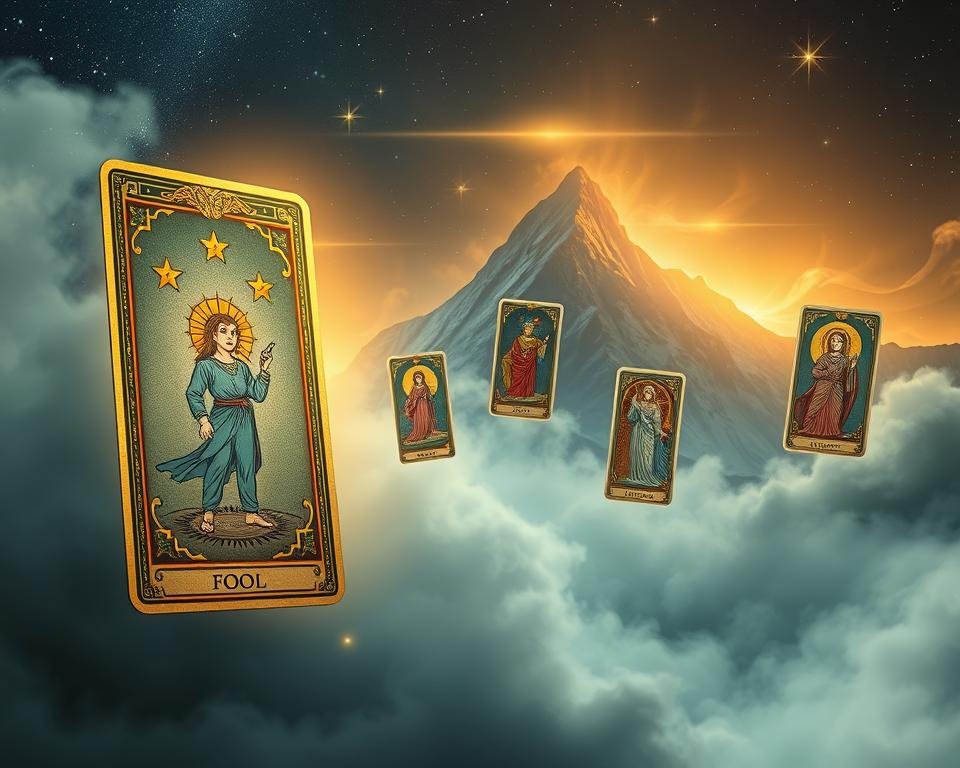
The Major Arcana cards, such as the Fool, the Magician, and the High Priestess, hold deep symbolic meanings that can signify significant life events or personal characteristics. For instance, the Fool is often associated with new beginnings and taking risks, while the Magician represents skill, manifestation, and personal power.
The Minor Arcana, on the other hand, is divided into four suits, similar to a regular playing card deck. Each suit corresponds to a different aspect of life: Wands for creativity and energy, Cups for emotions, Swords for thoughts and communication, and Pentacles for material wealth and practicality. Understanding the tarot meaning within these suits can provide insights into daily life and personal challenges.
Interestingly, the pronunciation of “tarot” is often a point of discussion among enthusiasts. While some pronounce it as “tah-roh,” others say “teh-roh.” Regardless of the pronunciation, the tarot pronunciation is less important than understanding the card meanings and their significance in a reading.
By grasping both the Major and Minor Arcana card meanings, readers can enhance their tarot reading skills, providing more accurate and meaningful interpretations for themselves and others.
Major Arcana Cards
In the realm of tarot, the Major Arcana cards stand out for their complex symbolism and interpretation. These cards are pivotal in tarot readings, offering deep insights into an individual’s journey, challenges, and future possibilities.
Exploring the Major Arcana
The Major Arcana consists of 22 cards, each with its unique symbolism, imagery, and meaning. Cards such as the Fool, the Magician, and the High Priestess are steeped in tradition and are crucial for understanding the broader context of a tarot reading. The correct tarot pronunciation is also important, as it enhances the reader’s connection to the cards and their meanings.
Understanding the Major Arcana requires delving into its rich history and the various interpretations associated with each card. For instance, the card “The World” signifies completion and fulfillment, while “The Tower” represents sudden change or upheaval. Familiarity with these cards and their meanings is essential for both novice and experienced tarot readers.
Symbolism and Interpretation
The symbolism in the Major Arcana cards is multifaceted, drawing from various cultural, historical, and mystical sources. For example, the imagery on the cards can be influenced by mythology, alchemy, and astrology, adding layers of depth to their interpretation. Understanding the tarot definition and how to apply it in readings is crucial for interpreting these symbols accurately.
When interpreting the Major Arcana cards, readers must consider their position in the spread, their relation to other cards, and the question being asked. The pronunciation of tarot terms and the names of the cards can also influence the reader’s focus and the energy they bring to the reading.
Practicing with the Major Arcana cards, including understanding their symbolism and mastering their interpretation, is key to becoming proficient in tarot readings. As readers deepen their understanding of these cards, they can provide more insightful and meaningful readings for themselves and others.
Minor Arcana Cards
Understanding the Minor Arcana is crucial for any tarot enthusiast, as these cards provide detailed insights into the nuances of our lives. The Minor Arcana cards are divided into four suits, similar to a regular playing card deck, but with distinct tarot meanings that offer deeper understandings of our experiences.
Understanding the Minor Arcana
The Minor Arcana cards are often seen as the “story” or the details of a situation, contrasting with the Major Arcana’s more thematic or symbolic messages. Each suit within the Minor Arcana corresponds to a different aspect of life: Wands for creativity and energy, Cups for emotions and relationships, Swords for thoughts and communications, and Pentacles for material possessions and practicality.
The interpretation of Minor Arcana cards heavily relies on their suit, number, and the context of the tarot reading. For instance, the Eight of Cups might signify leaving something emotional behind, while the Five of Pentacles could indicate financial hardship or feeling left out. Understanding the tarot pronunciation of these cards, such as “Eight of Cups” or “Five of Pentacles,” can also enhance one’s connection to their symbolism and meaning.
When interpreting the Minor Arcana, it’s essential to consider the card’s position in the spread, its relation to other cards, and the question being asked. This holistic approach allows for a richer understanding of the tarot’s message, providing guidance on various life aspects, from emotional journeys to practical decisions.
- Wands: Associated with creativity, passion, and energy.
- Cups: Emotions, relationships, and connections.
- Swords: Thoughts, communications, and mental clarity.
- Pentacles: Material wealth, practicality, and physical aspects.
By mastering the Minor Arcana and their tarot meanings, tarot readers can offer more nuanced and detailed readings, helping querents navigate life’s complexities with greater clarity and confidence.
How to Use the Guide
Mastering the art of tarot reading begins with understanding the basics, including the correct pronunciation of ‘tarot’. The word “tarot” is pronounced as “tah-roh,” a simple yet crucial detail for any aspiring tarot reader.
To effectively use this guide, readers should first familiarize themselves with the tarot definition and its historical context. Tarot cards are not just tools for fortune-telling but also a means of self-reflection and personal growth.
Practical Tips for Tarot Readers
Here are some practical tips to enhance your tarot reading experience:
- Practice regularly to become more comfortable with the cards and their meanings.
- Start with simple spreads and gradually move to more complex ones.
- Pay attention to the imagery and symbolism on the cards, as they hold deep insights.
By following these tips and practicing the correct pronunciation of “tarot,” you’ll be well on your way to becoming a confident tarot reader.
Remember, the key to mastering tarot lies in patience, practice, and a willingness to learn. With this guide, you’re equipped to start your journey into the world of tarot reading.
Conclusion
Understanding tarot pronunciation is a crucial step in unlocking the full potential of tarot readings. By correctly pronouncing the names of the cards, readers can tap into the symbolic language of the tarot, enhancing their connection to the deck and the querent.
As discussed, the Major and Minor Arcana cards hold distinct meanings, and mastering their interpretations is key to delivering insightful readings. The guide provided has outlined the pronunciation and meanings of these cards, empowering readers to deepen their understanding of tarot meaning.
With practice and dedication, tarot enthusiasts can confidently navigate the world of tarot, using the correct tarot pronunciation to access the rich symbolism and depth of the cards. By doing so, readers can provide more accurate and meaningful readings, fostering a stronger connection with those seeking guidance.
FAQ
How do you pronounce “tarot”?
The word “tarot” is pronounced as “tah-roh” or “teh-roh,” with both pronunciations being widely accepted.
What does “tarot” mean?
Tarot refers to a form of divination that uses a deck of cards with symbolic images, used for gaining insight, guidance, and self-reflection.
What is the definition of tarot reading?
Tarot reading is the practice of interpreting the symbolism and meaning of tarot cards to understand an individual’s situation, challenges, and potential outcomes.
What is the difference between Major and Minor Arcana cards?
Major Arcana cards represent major life themes, transitions, and archetypes, while Minor Arcana cards reflect everyday situations, emotions, and experiences.
How do I improve my tarot pronunciation?
To improve your tarot pronunciation, listen to native speakers, practice saying the word “tarot” out loud, and explore resources that provide audio guidance.
What is the significance of correct tarot pronunciation?
Correct tarot pronunciation shows respect for the tradition and history behind tarot cards, enhancing your connection to the practice and its community.
Can I use tarot for personal growth and self-reflection?
Yes, tarot is often used as a tool for personal growth, self-reflection, and gaining a deeper understanding of oneself and one’s life circumstances.